What the research actually says
Let's start with the most careful source we know. The American Academy of Dermatology's page on red light therapy sums it up: some studies show that red-light LED devices "can produce subtle to noticeable results on the face" for fine lines and wrinkles, dark spots, rough-feeling skin, discoloration like redness, and loose skin. In one study it describes, 90 patients had eight LED red-light treatments over four weeks, and more than 90% noticed some improvement.
The same page is honest about the limits. Studies use different devices, for different lengths of time, asking different questions, so their results can't be compared. "More research is needed," it says, on how long red light can safely be used, how many sessions are ideal, and how much light is right for home use.
So: real, but modest. Think "my skin looks a bit smoother and more even in my photos", not "ten years off in a month".
Red, near-infrared, blue: which light does what
Masks use three main families of light, and brands explain them in similar ways.
- Red (around 630 to 660 nm) is the visible red glow. Brands use it for fine lines, tone and radiance.
- Near-infrared (830 nm and up, sometimes 880 or 1072 nm) is invisible. Brands say it reaches deeper, where collagen and elastin are made, so they pair it with red for firmness.
- Blue (around 415 to 465 nm) is used against acne-causing bacteria on the skin's surface.
Some masks add amber, yellow or green for redness and pigmentation, like the CurrentBody Series 3 with six wavelengths. More colors isn't automatically better; the right colors for your goal are. If lines are your thing, red plus near-infrared. If it's breakouts, make sure there's blue.
How long before you see anything
Every brand gives a timeline, and they cluster around one to two months of regular use:
- Solawave: "as little as 30 days", with 3-minute sessions 3 to 5 times a week.
- Omnilux: results "starting at 4 weeks", with 10-minute sessions 3 to 5 times a week.
- CurrentBody: 8 weeks for its published results.
- Omnilux Clear (acne): four sessions a week for six weeks.
Two habits make the difference. First, consistency: a mask in a drawer does nothing, so the best mask is often the one with the shortest session you will actually keep doing. Second, photos: take a dated photo in the same light, same angle, on day one, then every two weeks. Changes this slow are invisible in the mirror.
Video: "Does Red Light Therapy Really Work? | Dermatologist Explains", Dr Dray on YouTube. Not made by us; chosen because it shows the device or the topic clearly.
Home masks vs a dermatologist's office
The AAD notes that the red light dermatologists use "is more powerful than that found in devices sold for at-home use", and that they usually add it to a plan with other treatments, like a medicated cream, microneedling or a peel. Some dermatologists recommend a home device to maintain results after in-office treatment.
That's a useful way to think about a mask: as a long-term habit or a maintenance tool, not a one-off fix. For acne in particular, the AAD's page on lasers and lights says light treatments can reduce acne but rarely clear it on their own, so a dermatologist should be in the loop if your breakouts are more than mild.
How to tell a serious mask from a gadget
Since you can't see near-infrared or measure output at home, judge a mask by what the brand is willing to publish:
- FDA wording. "FDA-cleared" (not "approved" or "certified"), ideally with the use named, like Omnilux's "FDA Cleared for the treatment of full face wrinkles".
- Wavelengths in nanometers and an LED count.
- An output figure, in mW/cm². Few brands give one: Solawave (65), HigherDOSE (50) and CurrentBody (30 for the Series 2) do.
- A return window you can actually use once you've opened the box. Results take weeks; a 14-day or "unopened only" policy is no trial.
That's exactly what our scoring formula checks.
Who should skip it, or ask first
Brands publish contraindications, and they overlap. Solawave's list is one of the clearest: under 22, pregnant or breastfeeding, active cancer, a photosensitivity disorder, light-triggered headaches, photosensitizing medication, a silicone or plastic allergy, or a sunburn in the past two weeks.
The AAD adds one point many brands skip: people with darker skin tones are more sensitive to visible light, which can lead to hyperpigmentation, so it recommends talking with a dermatologist before using an at-home red-light device. And whatever your skin, follow the device's directions on eye protection to the letter.

The masks in this guide, side by side
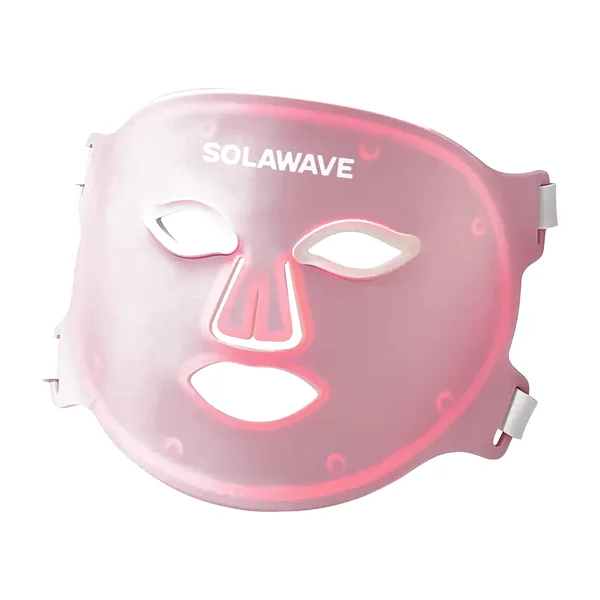
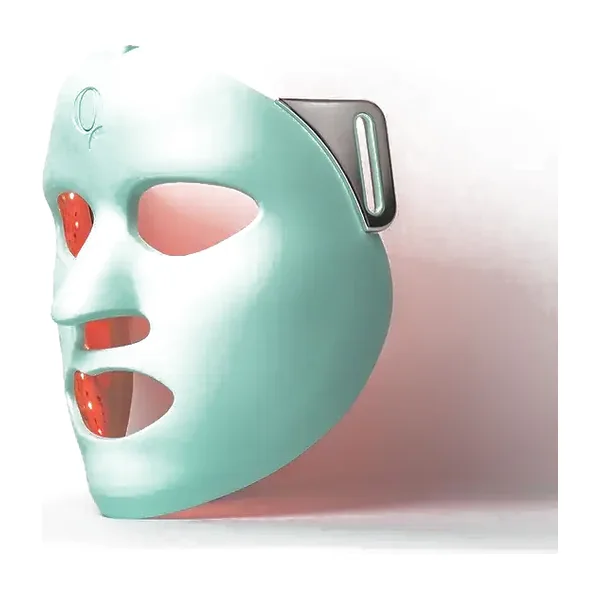
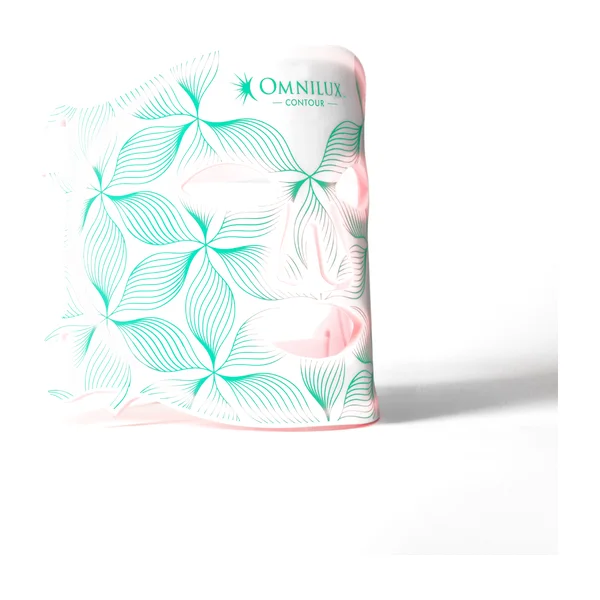
| Mask | |||
|---|---|---|---|
| Price | $399 | $249 | $395 |
| Cost per session (2 years, 4 a week) | $0.96/session | $0.60/session | $0.95/session |
| Kinds of light | amber/yellow, red, near-infrared | blue, amber/yellow, red, near-infrared | red, near-infrared |
| LEDs | 320 LEDs | 160 LEDs | 132 LEDs |
| Session | 3 min | 3 min | 10 min |
| Fit | Flexible | Not stated | Flexible |
| Power | Controller | Cordless | Controller |
| Warranty | 1-year | 1-year | 2-year |
| Returns | 100 days | 30 days | 30 days (unopened) |
| Buy | See price | See price | See price |
Prices checked November 12, 2026 on the brands' US stores. "Not stated" means the brand doesn't publish it. Build your own comparison.
This guide helps you buy, it isn't medical advice. If you are pregnant, have a skin or eye condition, a darker skin tone prone to dark spots, or take medication that makes you sensitive to light, talk to your doctor or a board-certified dermatologist before you start.